Hello, welcome to Road Cycling UK please use the links below to jump to a specific section.

Navigation Search Content Other Mpora Sites

Maintenance: wrapping handlebar tape

01:43PM Tue, 18th December 2012

Wrapping handlebars is a straight-forward procedure, but, like most simple tasks, there’s a right way and wrong way to do it.

We caught up with Jon Hayes, mechanic at independent bike dealer, Ride, to discover the most effective method of bar taping.

Adopting a ‘two birds, one stone’ approach, we asked Jon to demonstrate his skills by wrapping the bars of the RCUK winter bike.

Happily, he obliged, leaving us with a nicely finished winter steed, as well as this handy step-by-step guide.

Step one

Handlebar taping tutorial - RoadCyclingUK.com

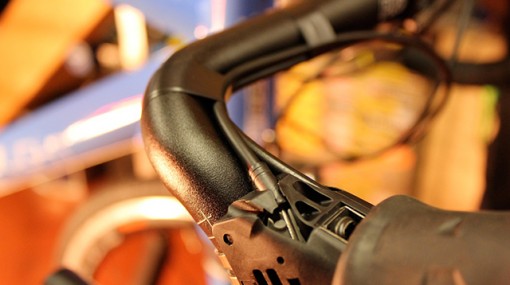
Ensure the cables are correctly seated within their STI lever housing

Having removed old handlebar tape, the next step is to ensure the brake and gear cables are secured to the bar with electrical tape. Keep the cables close to the bar, allowing them to follow its natural curve. Ensure the brake and gear cables do not cross beneath the electrical tape. Check that they are seated firmly in the housing of the STI lever.

Step two

Handlebar tape clinic - RoadCyclingUK.com

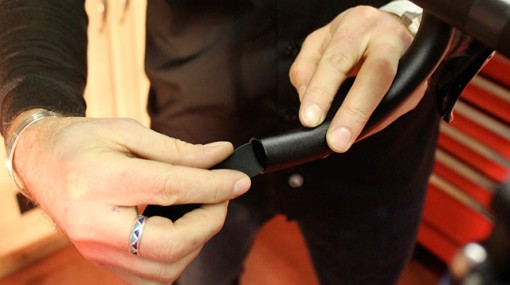
There are many ways to begin the taping procedure. Some prefer to insert a short length of tape into the bar end

With the cables secure against the bar, you’re ready to start applying the handlebar tape. Remove the adhesive backing strip from the handlebar tape if there is one (typically it’s yellow, and in the centre of the bar tape), and begin wrapping.

There are several different ways to start wrapping. Jon is an exponent of the method demonstrated here: inserting an inch or so into the bar as a first step before beginning to wind the tape around the handlebar. Inserting the end plug as the final step of the wrapping procedure will ensure it remains in place.

Alternatively, you can begin wrapping by laying the tape on the handlebar and covering the end with the next layer of tape. The tension will hold it in place.

It’s fine to wrap ‘inwards’ towards the frame, or ‘outwards’ away from it. The key is to adopt a consistent approach and wrap both sides in the same direction.

A uniformity in the overlap is also critical to a well-wrapped bar. Jon recommends an overlap of approximately half the width of the tape.

Step three: cheater strips

RoadCyclingUK.com - handlebar tape clinic

‘Cheater strips’ are applied to cover the clamp of an STI lever

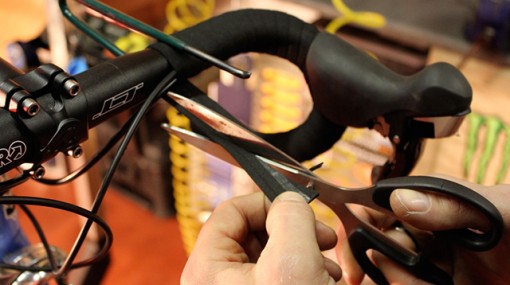
‘Cheater’ strips are used to cover the clamp inside the STI lever, and are usually supplied with the handlebar tape. In Jon’s experience, the strips are typically too long for the task and require trimming by about 10mm.

Roll back the lever hood to expose the clamp, and apply the ‘cheater’ strip. Be sure not to cover the indentations in the lever that correspond with the tabs on the inside of the rubber hoods. Doing so will create a lumpy and uncomfortable lever hood.

It’s useful to have a ‘third hand’ when applying ‘cheater strips’ to hold in place the section of tape already applied. Jon uses a ‘pin spanner’ (what looks like a large pair of tweezers) but a large clothes peg, or a helping hand from a willing assistant will work just as well.

Continue to wrap the bar, covering the ‘cheater’ strip, and winding the tape above the clamp towards the ‘tops’ of the bars. Use a pin spanner, clothes peg or assistant to hold the tape above the clamp in place, and roll the lever hood back into position.

Step four: cutting the bar tape

Handlebar tape clinic - taper cut - RoadCyclingUK.com

Cutting a taper at the end of the handlebar tape will make it easier to conceal beneath the electrical tape applied to retain tension

Continue winding the handlebar tape along the top of the bars, until the final revolution is reached. Standing in front of the bike, and pulling the tape towards you, use scissors to cut a taper on the side of the tape closest to the stem. This will reduce the width of the tape by approximately half, making it easier to conceal beneath the short wrap of electrical tape you’ll use to finish the job.

Step five: applying electrical tape

Handlebar tape clinic - RoadCyclingUK.com

Cut the electrical tape at a section that will be concealed beneath the handlebar

Electrical tape is used to hold the handlebar tape in place. Use just two or three revolutions of electrical tape over the bar tape, wound in the same direction. Cut the end of the electrical tape beneath the bar so the end is concealed.

Step six: fitting the bar end plug

Handlebar tape clinic - end plug - RoadCyclingUK.com

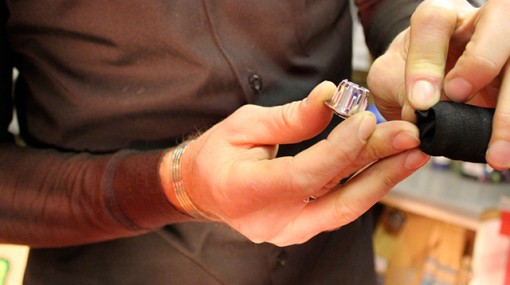
Some bar end plugs are embossed with a logo. Make sure it’s the right way up!

Tuck in any protruding tape to the end of the bar and push in the bar end plug. Some will have logos – make sure they’re they are the right way up!

Discuss in the forum

There are many ways to begin the taping procedure. Some prefer to insert a short length of tape into the bar end.
Coverage of the previous layer must be uniform. Aim for half-width
Some bar end plugs are embossed with a logo. Make sure it's the right way up!

Ensure the cables are correctly seated within their STI lever housing
Be sure not to wrap over sections of the lever that correspond with indentations in the lever hood
A pin spanner can be a handy tool to keep in place sections of handlebar tape already applied
'Cheater strips' are applied to cover the clamp of an STI lever
Cutting a taper at the end of the handlebar tape will make it easier to conceal beneath the electrical tape applied to retain tension
'Cheater strips' are typically too long, says Ride's Jon Hayes, who says they needing trimming by about 10mm


Profile picture for Timothy John

Posted by:

Timothy John

RoadCyclingUK Managing Editor

timothy.john@factorymedia.com

Maintenance: wrapping handlebar tape
6 votes, 4.67 avg. rating (92% score)